Culture
Dogtown, the Z-Boys, and Coffee in Santa Monica: How Skateboarding’s Rebel Spirit Lives On at Dogtown Coffee

Before skateboarding was a billion-dollar industry, before the X-Games, before Olympic medals and global sponsorships, there was a sun-bleached stretch of concrete, broken waves, and a crew of fearless kids from Los Angeles who changed the world forever. They called their neighborhood Dogtown. The rest of the world would come to know them as the Z-Boys.
And today, right in the heart of Santa Monica, that same raw, creative, rebellious energy still lives — not just in skateparks or on the streets, but inside a coffee shop that carries their legacy forward: Dogtown Coffee.
This is the story of how Los Angeles became the birthplace of modern skateboarding, how Dogtown and the Z-Boys reshaped global culture, and why coffee Santa Monica is more than caffeine — it’s a ritual that keeps the spirit alive.
Dogtown: The Rough Neighborhood That Created Legends
Dogtown wasn’t glamorous. It was everything Hollywood wasn’t.
Located between Venice Beach and Santa Monica, Dogtown was a gritty coastal strip of abandoned piers, empty lots, graffiti-covered walls, and cracked sidewalks. It was a place where kids grew up fast, surfed dangerous waves, and built their own culture because no one else was handing them one.
This was 1970s Los Angeles — a city of sharp contrasts. While Beverly Hills sparkled just miles away, Dogtown scraped by. Salt air mixed with concrete dust. Creativity thrived not because of opportunity, but because of necessity.
That same coastal grit and creative independence still defines the area today — a theme explored in Surf’s Down, Coffee’s Up: Fall Adventures Around Dogtown, which documents how Dogtown’s surf-and-street DNA continues to shape daily life along the coast.
And it was exactly this environment — rough, unpolished, and free — that produced greatness.
The Z-Boys: When Surfing Took to the Streets
Out of Dogtown emerged a crew of surfers who would become the most influential skateboarders in history: the Z-Boys.
Members of the Zephyr Surf Team — including Tony Alva, Jay Adams, and Stacy Peralta — they grew tired of waiting for waves. When drought hit California and backyard pools dried up, they did something no one had ever done before.
They took surfing to concrete.
They skated low, aggressive, and fluid. Their style mirrored wave riding — carving hard lines, snapping turns, and moving with intention. Skateboarding before them had been upright and stiff. The Z-Boys transformed it into expression.
This wasn’t about tricks.
It was about attitude.
About movement.
About identity.
Los Angeles didn’t just influence skateboarding.
Los Angeles invented modern skateboarding.
Santa Monica and Venice: The Streets That Became a Stage
While Dogtown was their home base, Santa Monica and Venice Beach became their proving ground.
Cracked sidewalks, slanted driveways, empty pools, and sun-baked concrete became terrain. They weren’t skating for trophies — they were skating to express something raw and real.
That same creative energy still fills Santa Monica today, and it’s one of the reasons coffee Santa Monica has become a cultural experience rather than just a beverage.
People don’t come to Santa Monica for chain stores and rushed routines. They come for authenticity. For history. For places that feel connected to something bigger.
And no place captures that better than Dogtown Coffee.
Dogtown Coffee: A Living Tribute to Skateboarding’s Roots
Dogtown Coffee isn’t just named after a neighborhood — it is built on its spirit.
Located minutes from the beaches, skate spots, and streets that made the Z-Boys legendary, Dogtown Coffee has become a modern gathering place for the same kinds of people who built skateboarding culture in the first place:
- Skaters
- Surfers
- Artists
- Filmmakers
- Locals
- Creators
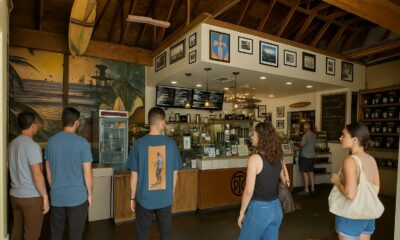
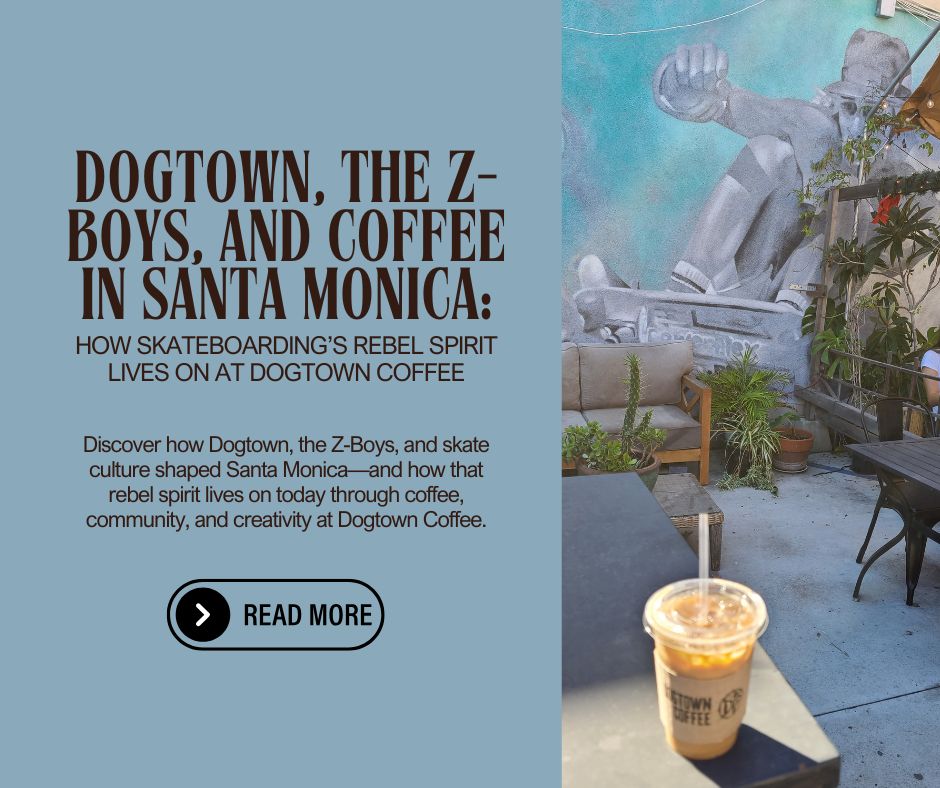
When you step inside Dogtown Coffee, you’re not just ordering a drink — you’re stepping into a piece of Los Angeles history.
This is coffee Santa Monica the way it should be: bold, authentic, and rooted in real culture.
The café’s role in Santa Monica’s cultural fabric aligns with how BigOnLosAngeles highlights independent spaces that preserve local identity rather than dilute it.
Why Coffee and Skate Culture Are a Perfect Match
Skateboarding has always been about community.
Before social media, before sponsorships, before global brands, skaters met in parking lots, at beaches, and at cafés. Coffee shops were where:
- Crews met
- Ideas were shared
- Zines were written
- Films were planned
- Friendships were formed
Dogtown Coffee continues that tradition today.
You’ll see skaters rolling in with boards under their arms, filmmakers editing footage, locals catching up, and visitors discovering the culture for the first time.
That’s what makes coffee Santa Monica special — it’s not rushed. It’s not corporate. It’s personal.
Just like Dogtown always was.
Los Angeles: The City That Built Skateboarding
Skateboarding didn’t come from boardrooms. It came from the streets of Los Angeles.
The Z-Boys didn’t ask permission. The city gave them space — empty pools, endless concrete, ocean air — and they created something entirely new.
Santa Monica sat right at the center of it all, where surf culture, punk energy, and street style collided. This creative collision is the same spirit captured in BigOnLosAngeles features that focus on real cultural origins rather than sanitized narratives.
Dogtown Coffee now sits within that same living story.
Why Dogtown Coffee Feels Different
Most cafés are designed by marketing teams.
Dogtown Coffee was shaped by culture.
Everything from the atmosphere to the people inside reflects the roots of Dogtown and the Z-Boys:
- Raw
- Real
- Unfiltered
- Creative
You’re not in a chain pretending to be cool.
You’re in a space that is cool — because it was built by the same kind of people who built skateboarding.
That’s why Dogtown Coffee remains a true coffee Santa Monica staple.
Tourists Come for the Beach — Locals Come for Dogtown
Santa Monica attracts millions of visitors each year.
But locals — the skaters, surfers, artists, and creatives — know where the real culture lives.
They come to Dogtown Coffee because it feels like:
- Venice Beach in the 70s
- Z-Boys carving empty pools
- Sunset sessions after long skate days
- Stories passed down, not packaged
That history isn’t locked in a museum.
It’s alive.
Dogtown Coffee Keeps the Flame Alive
Culture only survives when people protect it.
Dogtown Coffee doesn’t just sell drinks — it keeps the Dogtown legacy alive by:
- Supporting local creatives
- Hosting music and art
- Building community
- Honoring skate history
It’s the modern version of the gathering spots that fueled the Z-Boys.
That’s why it matters.
The Future of Dogtown Lives Here
Skateboarding may be global now — but its heart is still in Los Angeles.
And its soul still lives in places like Dogtown Coffee.
Every cup poured, every conversation shared, every board leaned against the wall keeps the story moving forward.
That’s the power of Dogtown.
That’s the legacy of the Z-Boys.
And that’s why coffee Santa Monica will always be more than just coffee.
It’s culture.
It’s history.
And at Dogtown Coffee, it’s still being written every single day.